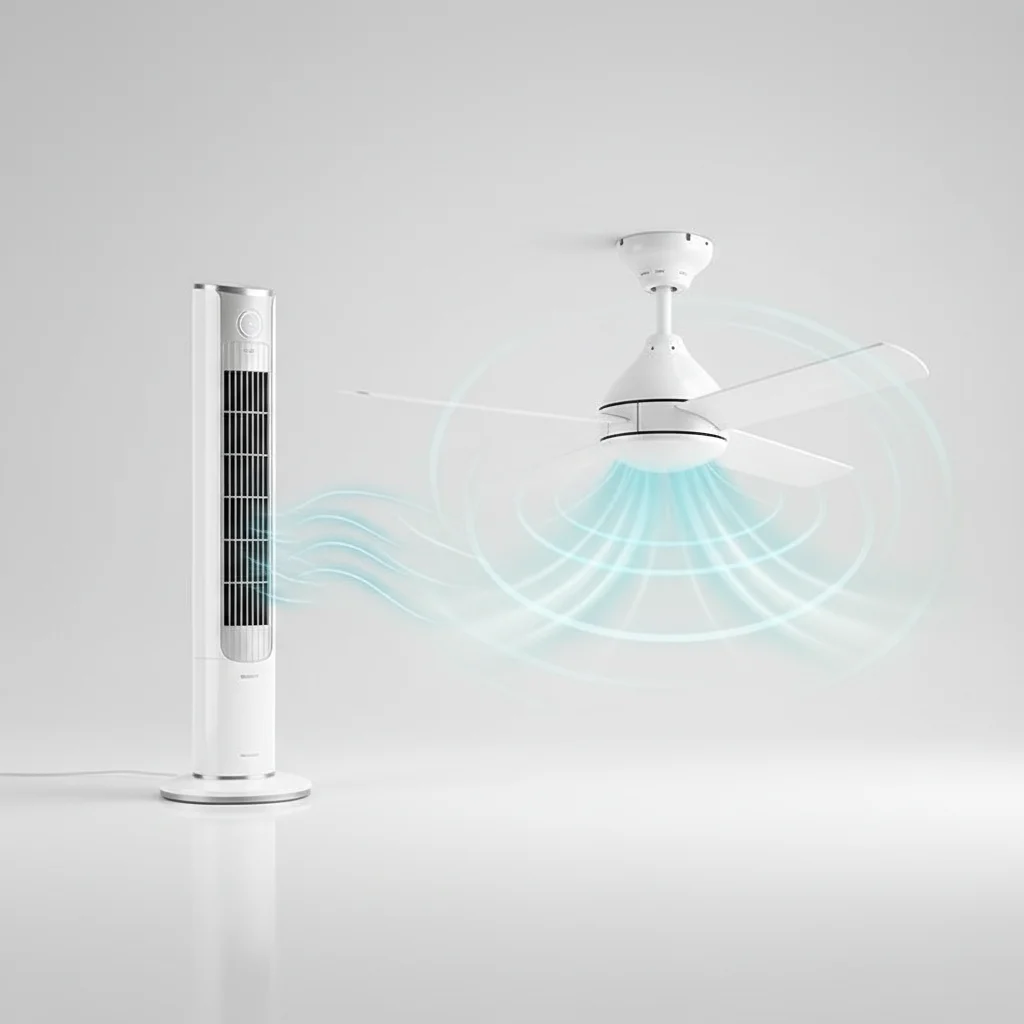
Deciding between a tower fan and a ceiling fan for your home cooling needs depends on several factors, including room size, portability requirements, and desired airflow. Generally, a tower fan offers superior portability and direct, focused cooling, making it ideal for personal use or smaller spaces. In contrast, a ceiling fan excels at circulating air throughout an entire room, providing a more ambient cooling effect for larger areas. Each fan type has distinct advantages that cater to different preferences and living situations.
Understanding Tower Fans: Benefits and Limitations
Tower fans are characterized by their tall, slender design and oscillating capabilities, which allow them to sweep air across a wider area. Their compact footprint makes them excellent for apartments, bedrooms, or offices where space is at a premium. Many models come with features like remote controls, multiple speed settings, and even air purification functions. The directed airflow of a tower fan can provide immediate relief, making it a popular choice for personal cooling. However, their cooling effect is typically less pervasive than that of a ceiling fan, and they may struggle to cool very large, open-plan rooms effectively.
- Space-saving design fits easily into tight corners.
- Highly portable for moving between rooms.
- Offers focused, direct airflow for personal cooling.
- Often includes advanced features like timers and remote controls.
- Generally quieter than many traditional fans.
Exploring Ceiling Fans: Advantages and Disadvantages
Ceiling fans are permanently installed fixtures designed to circulate air throughout an entire room. They work by creating a downdraft that pushes cool air down or an updraft that pulls warm air up, depending on the season and fan direction. This broad air movement helps to equalize room temperatures and can make a room feel several degrees cooler, reducing the reliance on air conditioning. While highly effective for whole-room cooling, ceiling fans lack portability and require professional installation. They are also less effective for direct, personal cooling compared to a tower fan.
Cooling Effectiveness and Energy Consumption Compared
|
Our Picks for the Best Tower Fan in 2026
As an Amazon Associate I earn from qualifying purchases.
|
||
| Num | Product | Action |
|---|---|---|
| 1 | Dreo Tower Fan for Bedroom, 90° Oscillating Standing Fans for Room with 4 Speeds, 3 Modes, 28dB Quiet for Sleep, 25ft/s Velocity, 8H Timer, Remote, Living Room, Office, Home, Black |

|
| 2 | Honeywell QuietSet Whole Room Tower Fan-Black, Oscillating Tower Fan with Remote, HYF290B |
|
| 3 | LEVOIT Tower Fan for Bedroom, 25ft/s Velocity Standing Fan with 28dB Quiet for Sleep, Remoter, 12H Timer, 5 Speeds, 4 Modes, 90° Oscillation for Home, Office, Indoor, Bladeless 36 inch, White |
|
| 4 | Dreo Tower Fan for Bedroom, 2026 Upgraded DC Motor, 28ft/s High Velocity, 20dB Ultra Quiet Standing Fan, 8 Speeds 4 Modes, 90° Oscillating Bladeless Fan for Indoors, Floor Fans with Remote, Black |
|
| 5 | Lasko High Velocity Oscillating Tower Fan for Bedroom, Garage, Basement, and Gym with Remote Control, Timer, 3 Powerful Speeds, 35" Silver/Black, U35115 |
|
| 6 | Dreo Tower Fan for Bedroom, 25ft/s Velocity Quiet Floor Fan, 90° Oscillating Fans for Indoors with 4 Speeds, 4 Modes, 8H Timer, Bladeless Fan, Standing Fans, Silver, Nomad One (DR-HTF007) |
|
| 7 | Honeywell QuietSet Whole Room Oscillating Tower filter Fan with Remote, White, HYF260 |
|
| 8 | PELONIS 40-Inch Tower Fan for Bedroom, Fan That Blows Cold Air, Oscillating Fan with Innovative Washable Design, 2000 CFM, 28ft/s Airflow, 4 Speeds + 2 Modes, 90° Oscillation, 23dB Quiet |
|
| 9 | Lasko Elevation Adjustable Tower Fan 42”-54”, Pedestal Fan, 31 ft/s Airflow, Quiet 28 dB, 90° Oscillation, 12h Timer, Remote, Black, EST100 |
|
| 10 | DREO Tower Fan for Bedroom, 4 Speeds, 3 Modes Standing Fans for Room with 90° wide Oscillating, 28dB Quiet for Sleep, 25ft/s Velocity, 29ft Coverage, 8H Timer, Remote, Living Room, Office, Home, White |
|
When it comes to cooling effectiveness, ceiling fans generally provide a more widespread and consistent cooling sensation across a larger area. They are excellent for maintaining a comfortable ambient temperature throughout a room. Tower fans, on the other hand, offer more concentrated airflow, which can feel more powerful for an individual in its direct path. In terms of energy consumption, both types of fans are significantly more energy-efficient than air conditioners. Modern tower fans and ceiling fans are designed with energy efficiency in mind, often consuming similar amounts of power, typically between 50 to 100 watts, depending on the model and speed setting.
Portability and Installation Differences
Portability is a key differentiator. Tower fans are designed to be easily moved from room to room, offering flexible cooling wherever it’s needed. They simply plug into an electrical outlet and are ready to go. Ceiling fans, conversely, are fixed installations. They require wiring into your home’s electrical system, often necessitating professional installation. This lack of portability means that once a ceiling fan is installed, its cooling benefits are confined to that specific room. Consider your need for flexible cooling versus a permanent solution when making your choice.
Noise Levels and Aesthetic Considerations
Noise levels can vary significantly between models for both tower and ceiling fans. Many modern tower fans are designed for quiet operation, especially at lower settings, making them suitable for bedrooms or offices. Ceiling fans, particularly those with well-balanced blades and quality motors, can also operate very quietly. Aesthetically, tower fans offer a sleek, modern look that can blend seamlessly into contemporary decor. Ceiling fans come in a vast array of styles, from traditional to contemporary, and can serve as a significant design element in a room. Your personal aesthetic preference and the existing decor of your home will play a role in this decision.
Making the Right Choice for Your Home
Ultimately, the choice between a tower fan and a ceiling fan depends on your specific needs. If you require portable, direct cooling for smaller spaces or personal use, a tower fan is likely the better option. If you need to circulate air throughout a larger room and prefer a more ambient cooling effect, a ceiling fan will be more effective. For optimal comfort, many homeowners choose to use both: a ceiling fan for general room cooling and a tower fan for targeted relief when needed.
