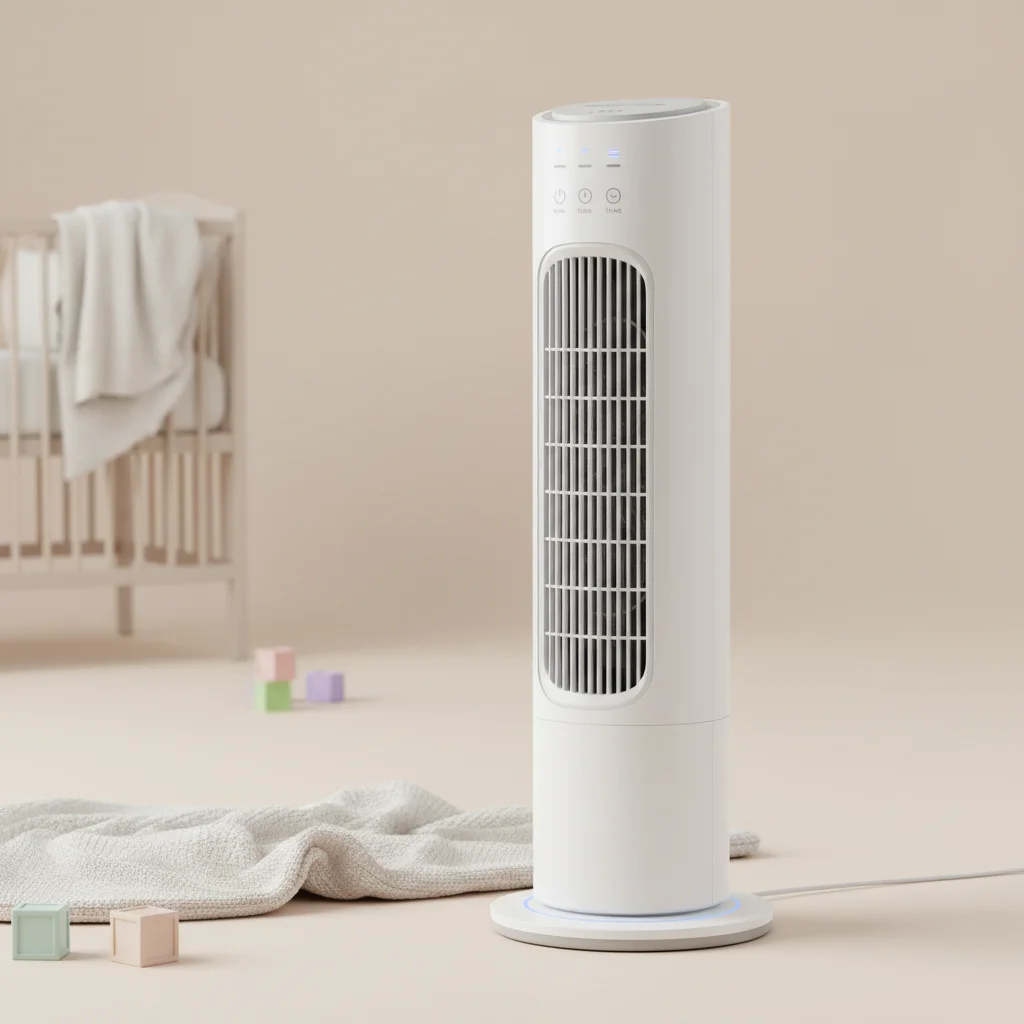
Using a tower fan in a baby’s nursery can be safe and beneficial, provided you choose the right type and follow specific safety guidelines. The primary concern is ensuring the fan doesn’t pose a direct hazard to the baby, such as accessible blades or tipping risks, while also maintaining a comfortable and safe room temperature without overcooling.
Why Consider a Tower Fan for a Baby’s Room?
Tower fans offer several advantages for a nursery. They provide gentle air circulation, which can help regulate room temperature and prevent overheating, a known risk factor for SIDS. The white noise generated by some fans can also be soothing, aiding in sleep. Unlike traditional fans, many tower fans have bladeless designs or very narrow grilles, making them safer for curious little fingers. They also take up less floor space, which is often at a premium in nurseries.
Key Safety Features to Look For
When selecting a tower fan for a baby’s room, prioritize models with specific safety features. Look for bladeless designs or those with extremely fine grilles that prevent access to moving parts. A wide, stable base is crucial to prevent tipping, especially as your child grows and becomes more mobile. Consider models with an automatic shut-off feature if tipped over. Low noise levels are also important to avoid disturbing sleep. Finally, ensure the fan has no small, detachable parts that could become choking hazards.
- Bladeless or fine-grille design for finger safety.
- Wide, stable base to prevent accidental tipping.
- Quiet operation to avoid disturbing sleep.
- No small, detachable parts that could be swallowed.
- Child-lock features on controls for added security.
Optimal Placement and Usage Tips
Proper placement of the tower fan is just as important as the fan itself. Position the fan out of your baby’s direct reach, ideally across the room from the crib, to circulate air indirectly. Avoid placing it too close to curtains or other fabrics that could obstruct airflow or pose a fire risk. Set the fan to a low or medium speed to create a gentle breeze, not a strong draft. Regularly clean the fan to prevent dust accumulation, which can affect air quality. Always supervise your baby and monitor the room temperature to ensure it remains comfortable, typically between 68-72°F (20-22°C).
Consider a model with a remote control so you can adjust settings without entering the room and potentially waking your baby. Some smart tower fans also offer app control, allowing for even greater convenience and temperature monitoring. Remember, a fan is not a substitute for proper ventilation or an air conditioner in extremely hot conditions, but it can significantly enhance comfort.
Recommended Tower Fan Features for Nurseries
|
Our Picks for the Best Tower Fan in 2026
As an Amazon Associate I earn from qualifying purchases.
|
||
| Num | Product | Action |
|---|---|---|
| 1 | Honeywell QuietSet Whole Room Tower Fan-Black, Oscillating Tower Fan with Remote, HYF290B |

|
| 2 | Dreo Tower Fan for Bedroom, 90° Oscillating Standing Fans for Room with 4 Speeds, 3 Modes, 28dB Quiet for Sleep, 25ft/s Velocity, 8H Timer, Remote, Living Room, Office, Home, Black |
|
| 3 | DREO Tower Fan for Bedroom, 4 Speeds, 3 Modes Standing Fans for Room with 90° wide Oscillating, 28dB Quiet for Sleep, 25ft/s Velocity, 29ft Coverage, 8H Timer, Remote, Living Room, Office, Home, White |
|
| 4 | Lasko High Velocity Oscillating Tower Fan for Bedroom, Garage, Basement, and Gym with Remote Control, Timer, 3 Powerful Speeds, 35" Silver/Black, U35115 |
|
| 5 | Lasko Elevation Adjustable Tower Fan 42”-54”, Pedestal Fan, 31 ft/s Airflow, Quiet 28 dB, 90° Oscillation, 12h Timer, Remote, Black, EST100 |
|
| 6 | Dreo Tower Fan for Bedroom, 25ft/s Velocity Quiet Floor Fan, 90° Oscillating Fans for Indoors with 4 Speeds, 4 Modes, 8H Timer, Bladeless Fan, Standing Fans, Silver, Nomad One (DR-HTF007) |
|
| 7 | LEVOIT Tower Fan for Bedroom, 25ft/s Velocity Standing Fan with 28dB Quiet for Sleep, Remoter, 12H Timer, 5 Speeds, 4 Modes, 90° Oscillation for Home, Office, Indoor, Bladeless 36 inch, White |
|
| 8 | Dreo Tower Fan for Bedroom, 2026 Upgraded DC Motor, 28ft/s High Velocity, 20dB Ultra Quiet Standing Fan, 8 Speeds 4 Modes, 90° Oscillating Bladeless Fan for Indoors, Floor Fans with Remote, Black |
|
| 9 | PELONIS 40-Inch Tower Fan for Bedroom, Fan That Blows Cold Air, Oscillating Fan with Innovative Washable Design, 2000 CFM, 28ft/s Airflow, 4 Speeds + 2 Modes, 90° Oscillation, 23dB Quiet |
|
| 10 | Honeywell QuietSet Whole Room Oscillating Tower filter Fan with Remote, White, HYF260 |
|
For a baby’s room, look for tower fans that offer multiple speed settings, allowing you to control the intensity of the airflow. An oscillation feature is beneficial as it distributes air more evenly across the room, preventing cold spots. A timer function can be useful for setting the fan to turn off after a certain period, conserving energy and ensuring the room doesn’t get too cool overnight. Some advanced models include air purification features, which can be a bonus for improving air quality, especially if your baby has allergies.
Always check for certifications like UL or ETL, which indicate the product meets specific safety standards. Read user reviews, specifically looking for feedback from parents who have used the fan in a nursery setting. Prioritize durability and ease of cleaning, as these fans will likely be running frequently and need regular maintenance.
When to Avoid Using a Tower Fan
While generally safe, there are situations where a tower fan might not be appropriate. If the room is already cool or cold, adding a fan could make it uncomfortably chilly for a baby. In extremely hot and humid conditions, a fan alone might not be sufficient to cool the room effectively and could even circulate warm air, making the baby feel hotter. In such cases, an air conditioner might be necessary. Always ensure your baby is dressed appropriately for the room temperature and check for signs of discomfort, such as sweating or cold hands/feet.
