When summer temperatures climb, a standard tower fan might feel like it’s just pushing around warm air, offering little relief. While fans are designed to circulate air and create a wind-chill effect on your skin, they don’t actively cool the air in the same way an air conditioner does. However, with a few clever and quick do-it-yourself strategies, you can significantly enhance your tower fan’s ability to deliver a much colder, more refreshing breeze, turning your warm space into a more comfortable haven without breaking the bank.
The Science Behind Fans and Cooling
Understanding how a fan works is the first step to making it more effective. A tower fan doesn’t lower the ambient temperature of a room; instead, it moves air, which helps evaporate sweat from your skin, making you feel cooler. This is known as the wind-chill effect. To make your fan blow colder, the goal is to introduce elements that actively cool the air passing through or around the fan, or to strategically manage the air temperature within your environment. These DIY methods leverage principles like evaporative cooling and optimized airflow to create a perception of much colder air.
Instant Relief: The Ice-Based Cooling Hacks
One of the most popular and effective ways to get colder air from your tower fan involves ice. These methods essentially turn your fan into a mini evaporative cooler.
The Classic Ice Bowl/Bottle Method
|
Our Picks for the Best Tower Fan in 2026
As an Amazon Associate I earn from qualifying purchases.
|
||
| Num | Product | Action |
|---|---|---|
| 1 | Lasko High Velocity Oscillating Tower Fan for Bedroom, Garage, Basement, and Gym with Remote Control, Timer, 3 Powerful Speeds, 35" Silver/Black, U35115 |

|
| 2 | Honeywell QuietSet Whole Room Tower Fan-Black, Oscillating Tower Fan with Remote, HYF290B |
|
| 3 | LEVOIT Tower Fan for Bedroom, 25ft/s Velocity Standing Fan with 28dB Quiet for Sleep, Remoter, 12H Timer, 5 Speeds, 4 Modes, 90° Oscillation for Home, Office, Indoor, Bladeless 36 inch, White |
|
| 4 | PELONIS 40-Inch Tower Fan for Bedroom, Fan That Blows Cold Air, Oscillating Fan with Innovative Washable Design, 2000 CFM, 28ft/s Airflow, 4 Speeds + 2 Modes, 90° Oscillation, 23dB Quiet |
|
| 5 | DREO Tower Fan for Bedroom, 4 Speeds, 3 Modes Standing Fans for Room with 90° wide Oscillating, 28dB Quiet for Sleep, 25ft/s Velocity, 29ft Coverage, 8H Timer, Remote, Living Room, Office, Home, White |
|
| 6 | Dreo Tower Fan for Bedroom, 2026 Upgraded DC Motor, 28ft/s High Velocity, 20dB Ultra Quiet Standing Fan, 8 Speeds 4 Modes, 90° Oscillating Bladeless Fan for Indoors, Floor Fans with Remote, Black |
|
| 7 | Dreo Tower Fan for Bedroom, 25ft/s Velocity Quiet Floor Fan, 90° Oscillating Fans for Indoors with 4 Speeds, 4 Modes, 8H Timer, Bladeless Fan, Standing Fans, Silver, Nomad One (DR-HTF007) |
|
| 8 | Honeywell QuietSet Whole Room Oscillating Tower filter Fan with Remote, White, HYF260 |
|
| 9 | Lasko Elevation Adjustable Tower Fan 42”-54”, Pedestal Fan, 31 ft/s Airflow, Quiet 28 dB, 90° Oscillation, 12h Timer, Remote, Black, EST100 |
|
| 10 | Dreo Tower Fan for Bedroom, 90° Oscillating Standing Fans for Room with 4 Speeds, 3 Modes, 28dB Quiet for Sleep, 25ft/s Velocity, 8H Timer, Remote, Living Room, Office, Home, Black |
|
This hack is incredibly simple yet surprisingly effective. Place a shallow bowl filled with ice cubes or several frozen water bottles directly in front of your tower fan. As the fan blows air over the ice, the cold surface causes the air to cool down. Furthermore, as the ice melts and water evaporates, it adds a refreshing coolness to the air stream, mimicking a cool mist.
For optimal results, consider using a wide, shallow dish for ice cubes. This increases the surface area exposed to the airflow, leading to more efficient cooling. If using frozen water bottles, they offer the convenience of being refreezable, providing a sustainable cooling solution. Remember to place a towel or tray underneath to catch any condensation or drips as the ice melts.
> “Placing a bowl of ice or a frozen water bottle in front of a fan is a popular DIY cooling hack, especially during heat waves. The idea is that as the fan blows air over the ice, it cools the air slightly, creating a mini air conditioning effect.”
Safety First: It is crucial to maintain a safe distance between the ice container and your fan’s electrical components to prevent any risk of electric shock from water spills. These methods are best for personal cooling or small, enclosed areas, offering immediate but localized relief.
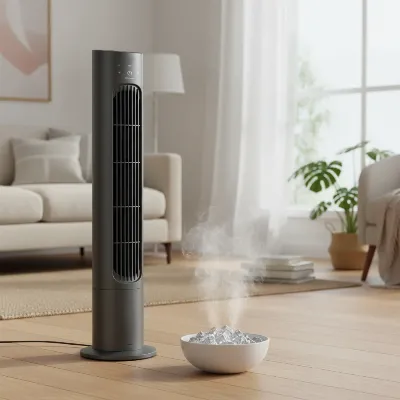 A tower fan blowing air over a bowl of ice cubes on a wooden floor in a cozy living room with soft natural light, realistic style
Enhancing Tower Air Coolers
If you own a tower air cooler that already uses water, you have an even more direct way to boost its cooling power. These units often come with a water tank or an ice chamber. To get the coldest air possible, fill the tank with chilled water instead of room-temperature water. Adding ice packs or several frozen water bottles directly into the water tank or designated ice chamber will further reduce the water temperature, leading to a significantly colder airflow. This provides instant relief and can maintain a cooler output for longer periods.
Strategic Placement for Optimal Airflow
Where you position your tower fan can dramatically impact its ability to cool your space. Strategic placement leverages natural air movement and external cooler air.
Harnessing Ground-Level Cool Air
Hot air naturally rises, while cooler, denser air tends to stay closer to the ground. By positioning your tower fan on the floor, you tap into this cooler layer of air and circulate it upwards and throughout the room. This simple adjustment, especially effective for tower fans given their vertical design, can make a noticeable difference in how cool the air feels as it reaches you.
Utilizing Windows and Doors for Cross-Ventilation
Optimizing airflow by strategically placing your fan near windows and doors can be highly effective. If the air outside is cooler than inside your room, typically during evenings or early mornings, place your tower fan near an open window or door. Position it to face inward, drawing the fresh, cooler outdoor air into your living space.
For even more powerful cooling, consider a cross-ventilation setup with two fans. Place one fan facing out of a window to expel hot, stagnant indoor air. Then, position a second fan, or even your tower fan, facing in through another open window or doorway on the opposite side of the room. This creates a powerful cross-breeze that pushes warm air out and pulls cooler air in, refreshing the entire room much faster. Alternatively, simply pointing a single fan out of an open window can effectively push hot air out, creating negative pressure that draws cooler air in from other openings in the room.
 A tower fan placed near an open window, with a gentle breeze coming into a modern bedroom, illustrating cross-ventilation, soft lighting, realistic
Boost Cooling with Evaporative Methods
Beyond ice, other simple evaporative techniques can help your fan generate a colder sensation.
The Wet Clothes/Drying Laundry Trick
This ingenious hack uses the principle of evaporation to cool the air. Hang damp or wet clothes, such as towels or freshly laundered items, in front of your tower fan. As the fan blows air through the wet fabric, the moisture evaporates, and this process absorbs heat from the air, making the airflow feel cooler. For an enhanced effect, soak the clothes in ice-cold water before hanging them. Ensure the clothes are wrung out enough to prevent dripping, protecting your floors and electrical devices. This method not only cools the air but can also add a touch of humidity, which can be pleasant in very dry environments.
Essential Maintenance and Room Optimization
Even the best hacks won’t work optimally if your fan isn’t well-maintained or your room isn’t prepped for cooling.
Keep It Clean: The Power of Maintenance
Over time, dust and grime can accumulate on your tower fan’s intake vents, blades, and output grills. This buildup restricts airflow, forcing the motor to work harder and reducing the efficiency of the fan. Regularly cleaning these components with a soft brush, cloth, or vacuum attachment can significantly improve airflow and ensure your fan operates at its peak performance. For tower air coolers, it’s even more critical to clean cooling pads and the water tank regularly to prevent mold and ensure hygienic, efficient cooling.
Master Your Environment
Controlling your room’s overall temperature can make your fan’s job much easier. During the hottest parts of the day, keep blinds, curtains, and shades closed to block direct sunlight and prevent heat from radiating into your room.
If you have a ceiling fan in addition to your tower fan, ensure it’s spinning in the correct direction for summer cooling. Ceiling fans should rotate counter-clockwise in warmer months. This pushes air down, creating a downdraft that generates a cooling breeze. In winter, they should run clockwise at a low speed to gently pull cool air up and push warm air down, recirculating heat.
For a final touch of personal coolness, consider chilling your linens. Briefly placing bedsheets, pillowcases, or even clothing in the freezer for 30 to 60 minutes before use can provide an immediate and incredibly refreshing sensation as you slip into bed or get dressed. Your fan can then help maintain this chill longer by circulating air around your cooled items.
Conclusion
While a tower fan alone cannot replicate the powerful cooling of an air conditioner, these quick and affordable DIY hacks can dramatically improve its performance. By strategically using ice, optimizing fan placement for better ventilation, employing evaporative methods like damp cloths, and maintaining your unit, you can transform your tower fan into a much more effective cooling device. Experiment with these methods to discover which combination works best for your specific needs and room setup. Don’t let the heat get the best of you – a little ingenuity can go a long way in staying cool and comfortable.
What quick cooling tricks have you found most effective with your tower fan?
Frequently Asked Questions
Do fans actually cool the air?
No, standard fans do not actually cool the air. They work by circulating air, which creates a wind-chill effect on your skin, helping to evaporate sweat and make you feel cooler. The air temperature of the room itself remains unchanged unless other cooling elements like ice are introduced.
Is it safe to put ice in front of a fan?
Yes, it can be safe if done correctly. The primary concern is preventing water from coming into contact with the fan’s electrical components. Always place the ice bowl or frozen bottles in a stable container with a towel underneath to catch condensation or spills, ensuring a safe distance from the fan itself.
How long do these DIY methods last?
The duration of the cooling effect largely depends on the amount of ice used, the room temperature, and humidity. Ice-based methods typically provide noticeable cooling for 30 minutes to a couple of hours as the ice melts. Repositioning fans for cross-ventilation or using wet clothes can offer a more continuous, albeit milder, cooling effect.
Can these methods replace an air conditioner?
While these DIY hacks significantly improve a Tower Fan’s cooling ability, they cannot fully replace the sustained, powerful cooling and dehumidification provided by a dedicated air conditioning unit. They are best suited for providing temporary relief, supplementing existing cooling, or making smaller spaces more comfortable.