If your tower fan is blowing warm air, it’s typically due to the ambient room temperature being warm, or because dust and debris have accumulated on its internal components, restricting airflow. You can quickly resolve this by placing a bowl of ice in front of the fan, optimizing its placement for better air circulation, and performing regular cleaning to maintain efficiency and ensure it provides a refreshing breeze.
What is a Tower Fan? Why Are They Popular?
A tower fan is a slender, upright cooling appliance designed to circulate air efficiently within a room. Unlike traditional box or pedestal fans with exposed rotating blades, tower fans typically house internal impellers within their tall, narrow chassis, drawing air from the back or sides and expelling it through a vertical grille. Key components include the base for stability, the housing that contains the motor and impeller, the air intake and outlet grilles, and a control panel, often supplemented with a remote.
Compared to other fan types, tower fans offer distinct advantages and a few drawbacks. Pedestal fans, for instance, often provide more powerful, directed airflow but can be bulky and aesthetically less pleasing. Desk fans are compact but limited to very small areas. Ceiling fans offer widespread circulation but are fixed installations. Tower fans excel in their space-saving design, easily fitting into tight corners without obstructing pathways. They are frequently lauded for their quiet operation, making them ideal for bedrooms or offices where noise is a concern. Many models also boast advanced features like oscillation, multiple speed settings, timers, and even air purification capabilities, further enhancing their appeal. Their sleek, modern aesthetic allows them to blend seamlessly into contemporary home decor, contributing to their growing popularity in households and offices seeking unobtrusive, energy-efficient cooling solutions. For expert reviews reviews on this site.
Common Types of Tower Fans on the Market
Tower fans come in various designs and with different functionalities to suit diverse needs and preferences. Understanding these classifications can help you choose the best fan for your specific environment.
Categorization by size is common. Small tower fans are compact, usually under 20 inches, perfect for personal use on a desk or bedside table. Medium-sized fans, ranging from 20 to 30 inches, are versatile for small to medium rooms. Large tower fans, over 30 inches, offer broader coverage for larger living areas, often with more powerful motors and extended oscillation.
Classification by features highlights convenience and enhanced functionality. Many models include remote controls for effortless adjustment from a distance, programmable timers to conserve energy by shutting off automatically, and multiple fan speeds to customize airflow intensity. Natural breeze modes mimic the fluctuating intensity of outdoor wind, providing a more dynamic and less constant airflow, while sleep modes reduce fan speed and noise for undisturbed rest. Some advanced fans even include air ionization functions to help purify the air by reducing allergens and dust, offering a dual benefit of cooling and improved air quality.
Technology-driven classifications include inverter tower fans, which use inverter technology for more energy-efficient and quieter operation by precisely controlling motor speed. Bladeless tower fans, popularized by brands like Dyson, use air multiplier technology to draw in air and project a smooth, high-velocity airflow without visible external blades. These are often considered safer, especially in homes with children or pets, and are typically easier to clean. Each type offers specific benefits, from the quiet efficiency of inverter models to the sleek design and safety of bladeless options, but they also come with varying price points and performance characteristics.
Factors to Consider When Buying a Tower Fan (Buying Guide)
Choosing the right tower fan involves evaluating several key factors to ensure it meets your specific cooling requirements and lifestyle.
Room Size
|
Our Picks for the Best Tower Fan in 2026
As an Amazon Associate I earn from qualifying purchases.
|
||
| Num | Product | Action |
|---|---|---|
| 1 | Dreo Tower Fan for Bedroom, 90° Oscillating Standing Fans for Room with 4 Speeds, 3 Modes, 28dB Quiet for Sleep, 25ft/s Velocity, 8H Timer, Remote, Living Room, Office, Home, Black |

|
| 2 | PELONIS 40-Inch Tower Fan for Bedroom, Fan That Blows Cold Air, Oscillating Fan with Innovative Washable Design, 2000 CFM, 28ft/s Airflow, 4 Speeds + 2 Modes, 90° Oscillation, 23dB Quiet |
|
| 3 | Dreo Tower Fan for Bedroom, 25ft/s Velocity Quiet Floor Fan, 90° Oscillating Fans for Indoors with 4 Speeds, 4 Modes, 8H Timer, Bladeless Fan, Standing Fans, Silver, Nomad One (DR-HTF007) |
|
| 4 | Lasko Elevation Adjustable Tower Fan 42”-54”, Pedestal Fan, 31 ft/s Airflow, Quiet 28 dB, 90° Oscillation, 12h Timer, Remote, Black, EST100 |
|
| 5 | Dreo Tower Fan for Bedroom, 2026 Upgraded DC Motor, 28ft/s High Velocity, 20dB Ultra Quiet Standing Fan, 8 Speeds 4 Modes, 90° Oscillating Bladeless Fan for Indoors, Floor Fans with Remote, Black |
|
| 6 | LEVOIT Tower Fan for Bedroom, 25ft/s Velocity Standing Fan with 28dB Quiet for Sleep, Remoter, 12H Timer, 5 Speeds, 4 Modes, 90° Oscillation for Home, Office, Indoor, Bladeless 36 inch, White |
|
| 7 | Honeywell QuietSet Whole Room Oscillating Tower filter Fan with Remote, White, HYF260 |
|
| 8 | Honeywell QuietSet Whole Room Tower Fan-Black, Oscillating Tower Fan with Remote, HYF290B |
|
| 9 | Lasko High Velocity Oscillating Tower Fan for Bedroom, Garage, Basement, and Gym with Remote Control, Timer, 3 Powerful Speeds, 35" Silver/Black, U35115 |
|
| 10 | DREO Tower Fan for Bedroom, 4 Speeds, 3 Modes Standing Fans for Room with 90° wide Oscillating, 28dB Quiet for Sleep, 25ft/s Velocity, 29ft Coverage, 8H Timer, Remote, Living Room, Office, Home, White |
|
The effectiveness of your tower fan is significantly impacted by the size of the room it needs to cool. A fan’s primary role is to circulate air, and a fan that is too small for a large room will struggle to provide noticeable relief, often making it feel like it’s just pushing warm air around. For small rooms (under 150 sq ft), a compact tower fan with a modest output is often sufficient. Medium rooms (150-250 sq ft) typically benefit from fans with stronger airflow and wider oscillation. For larger spaces (over 250 sq ft), consider powerful models with high CFM (Cubic Feet per Minute) ratings or strategically place multiple fans for optimal coverage. Always check the manufacturer’s recommendations for room size suitability, as this will help guide you toward a fan with appropriate power.
Noise Level
The operational noise of a tower fan can be a critical factor, especially if it’s intended for a bedroom, office, or living area where quiet is valued. Fans generate noise primarily from the motor and the movement of air. Models designed for quiet operation often feature advanced motor technologies or aerodynamic designs that minimize turbulence. Look for specifications indicating decibel (dB) levels; generally, fans operating below 50 dB are considered quiet, with some “sleep mode” options going even lower. While a powerful fan might be effective, if its noise disrupts your activities, it defeats the purpose. Always balance cooling power with an acceptable noise level for your environment.
Features
Modern tower fans come loaded with features that enhance comfort and convenience. Remote controls allow you to adjust settings without getting up, perfect for relaxation. Timers are excellent for energy saving, letting you set the fan to turn off after a certain period, such as once you’ve fallen asleep. Oscillation is crucial for distributing air across a wider area, preventing stagnant spots. Multiple speed settings and wind modes (like natural breeze or sleep mode) offer flexibility to customize the airflow to your preference. Some fans include air purification or ionization to improve air quality, while others might have LED displays or touch controls for a modern user experience. Consider which features are truly beneficial for your daily use before making a purchase.
Brand and Price
The market offers a wide range of tower fans from various manufacturers, influencing both quality and price. Reputable brands often provide better durability, more consistent performance, and reliable customer support. Some well-known brands in the fan market include Dyson, Dreo, Lasko, Honeywell, and Pelonis, each offering different specializations and price points. While a higher price often correlates with advanced features, superior build quality, and quieter operation, many affordable options can still provide effective cooling. It’s wise to compare prices across different retailers and read user reviews to find a balance between quality, features, and your budget. Investing a little more in a durable, feature-rich model from a trusted brand can often lead to greater satisfaction and a longer lifespan for your appliance.
How to Stop Your Tower Fan From Blowing Warm Air Fast
It’s a common misconception that fans produce cold air. In reality, a tower fan circulates the existing air in a room, creating a wind-chill effect on your skin through evaporation, which makes you feel cooler. If your tower fan feels like it’s blowing warm air, it’s often because the ambient room temperature is already warm, or its efficiency is compromised. Fortunately, there are several quick and effective methods to enhance your tower fan’s cooling sensation.
One of the fastest ways to get cooler air is to place a bowl of ice or frozen water bottles directly in front of your fan. As the fan blows air over the melting ice, it picks up the cooler moisture, creating a chilled breeze similar to a DIY evaporative cooler. For an even greater effect, soak a towel in ice-cold water, wring it out, and hang it in front of the fan, allowing the evaporating water to cool the air.
Strategic fan placement also plays a crucial role. Since warm air rises, positioning your tower fan closer to the floor can help it draw in the slightly cooler air that naturally settles lower in the room, then distribute it upwards. Additionally, creating cross-ventilation by placing one fan near an open window (especially on the shady side of your house) to draw in cooler outside air and another fan strategically placed inside to push warm air out can significantly improve overall air circulation and cooling. Ensure windows and doors are closed in other parts of the room to maximize the effect of cross-ventilation.
Long-term solutions for consistent cool airflow often involve regular maintenance and cleaning. Dust and debris accumulate on internal components like fan blades, air intake grilles, and exhaust vents over time. This buildup restricts airflow, forcing the motor to work harder and potentially leading to a feeling of warm air due due to reduced efficiency. A thorough cleaning can restore your fan’s optimal performance. Ensure the fan is unplugged before any cleaning. Use a microfiber cloth for the exterior and a vacuum with a brush attachment or compressed air to dislodge dust from hard-to-reach internal areas.
“A fan doesn’t create cold, it creates comfort. By optimizing its environment and keeping it clean, you maximize that comfort.” – ReviewSnobs Admin, Tower Fan Expert
Comparison Table of Best Tower Fans
While specific model recommendations can change frequently with new product releases, understanding the key attributes of top-performing tower fans can guide your decision. Here’s a conceptual comparison table highlighting factors to consider when evaluating various models.
| Feature | Model A (Entry-Level) | Model B (Mid-Range) | Model C (Premium) |
|---|---|---|---|
| Brand | Reputable Budget Brand | Established Brand | Innovative Tech Brand |
| Power (CFM) | Moderate (e.g., 500 CFM) | Good (e.g., 750 CFM) | Excellent (e.g., 1000+ CFM) |
| Noise Level | Noticeable (45-55 dB) | Quiet (35-45 dB) | Ultra-Quiet (Under 35 dB) |
| Features | 3 Speeds, Oscillation | Remote, Timer, 5 Speeds, Natural Mode | Bladeless, Wi-Fi, App Control, Air Purifier, Sleep Mode |
| Room Size | Small to Medium (up to 200 sq ft) | Medium to Large (up to 350 sq ft) | Large (400+ sq ft) |
| Price Range | $50 – $100 | $100 – $200 | $200 – $500+ |
| Ideal for | Basic cooling, tight budgets | Enhanced comfort, quiet operation | Tech enthusiasts, premium experience, allergy sufferers |
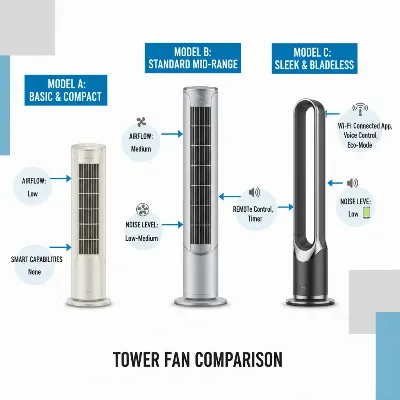 An illustrative comparison of different tower fan models highlighting their features and performance metrics.
Tower Fan Usage and Maintenance Tips
Maximizing the effectiveness and longevity of your tower fan relies heavily on proper usage and consistent maintenance. Adopting these simple tips will ensure your fan continues to provide a refreshing breeze for years to come.
For optimal performance, position your tower fan where it can draw air most effectively and distribute it widely. Avoid placing it directly against a wall or behind large furniture that might obstruct airflow. Utilizing the oscillation feature helps circulate air across a larger area, preventing hot spots and ensuring more uniform cooling throughout the room. Use the fan’s timer function to run it only when necessary, conserving energy and extending the motor’s lifespan. During periods of high humidity, pairing your tower fan with a dehumidifier can make the air feel significantly cooler by reducing moisture, as fans are most effective in less humid environments.
Regular cleaning is paramount to maintaining good air quality and the fan’s cooling efficiency. Dust, pet hair, and airborne particles can quickly accumulate on the grilles and internal components, reducing airflow and potentially causing the motor to overheat or blow musty air. Aim for a quick exterior wipe-down weekly and a more thorough deep clean at the start of each season or every 2-4 weeks if used frequently. Always unplug your fan before cleaning. Use a microfiber cloth to wipe the exterior, a vacuum cleaner with a brush attachment or compressed air to clear dust from vents and internal blades (if accessible), and cotton swabs for tight crevices. For models that can be partially disassembled, refer to the manufacturer’s instructions for safe and effective internal cleaning.
When the cooling season ends and your tower fan is no longer needed, proper storage is crucial. Clean the fan thoroughly before storing it to prevent dust buildup during its downtime. Use a dust-proof cover or store it in its original packaging in a clean, dry area away from extreme temperatures and humidity. This protects the internal components from dust and damage, ensuring it’s ready for efficient operation when you bring it out again next season.
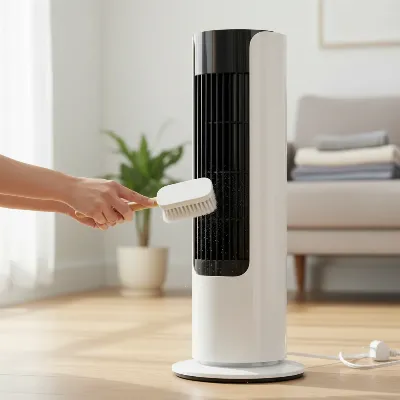 A close-up of hands cleaning a tower fan's grille with a brush, emphasizing essential maintenance for optimal performance.
Conclusion
A tower fan can be a valuable asset for maintaining comfort, especially when dealing with stuffy or warm rooms. Understanding that fans circulate existing air, rather than generating cold air, is key to optimizing their use. By implementing simple strategies like placing ice in front of the unit, ensuring proper room ventilation, and adhering to a routine cleaning schedule, you can significantly enhance your tower fan’s ability to provide a refreshing, cooling sensation. These small adjustments can make a substantial difference in your comfort, allowing you to enjoy a cooler environment without the need for more complex cooling systems.
How will these simple yet effective adjustments improve your perception of a “warm” fan into a truly refreshing breeze?
Frequently Asked Questions
Why does my tower fan feel like it’s blowing warm air even on a cool day?
Your tower fan circulates ambient air, so if the room itself is warm, the fan will move that warm air. Dust buildup inside the fan can also restrict airflow, making it less efficient and potentially contributing to a warmer sensation. Regular cleaning can often resolve this issue and improve airflow.
Can placing ice in front of my tower fan actually make a difference?
Yes, placing a bowl of ice or frozen water bottles directly in front of your tower fan can create a noticeable cooling effect. As the fan blows air over the ice, it facilitates evaporation, releasing cooler moisture into the air and providing a refreshing chill to the breeze.
How often should I clean my tower fan to prevent it from blowing warm air?
To maintain optimal performance and prevent dust-related warmth, it’s recommended to do a quick exterior dust and wipe every 2-4 weeks, especially during frequent use. A more thorough deep clean of internal components should be performed at the start of each cooling season or monthly if you have pets or high dust levels.
Does positioning matter for a tower fan’s cooling effectiveness?
Absolutely. Positioning your tower fan on the floor helps it draw in cooler, denser air that naturally settles lower. Using multiple fans to create cross-ventilation—drawing cool air in from one side and pushing warm air out another—significantly enhances overall room cooling.
Is it normal for a tower fan not to cool a large room effectively?
Tower fans are generally best suited for personal cooling or small to medium-sized rooms. In very large spaces, a single tower fan may struggle to circulate enough air to create a significant cooling effect, often leading to the perception that it’s just blowing warm air. Consider multiple units or supplemental cooling.
Should I get a bladeless tower fan if my current one blows warm air?
A bladeless tower fan offers smoother, often quieter airflow and is easier to clean, which can help maintain efficiency. However, it still operates by circulating ambient air. While it might feel more effective due to consistent airflow, it won’t inherently “create” cold air if the room itself is very warm.
Can an older tower fan be more prone to blowing warm air?
Yes, older tower fans can become less efficient over time due to wear and tear on the motor, accumulated dust that’s harder to remove, or degraded internal components. This reduced efficiency can manifest as weaker airflow and a perception of blowing warmer air, even after cleaning.
Frequently Asked Questions
Why does my tower fan feel like it's blowing warm air even on a cool day?
Your tower fan circulates ambient air, so if the room itself is warm, the fan will move that warm air. Dust buildup inside the fan can also restrict airflow, making it less efficient and potentially contributing to a warmer sensation. Regular cleaning can often resolve this issue and improve airflow.
Can placing ice in front of my tower fan actually make a difference?
Yes, placing a bowl of ice or frozen water bottles directly in front of your tower fan can create a noticeable cooling effect. As the fan blows air over the ice, it facilitates evaporation, releasing cooler moisture into the air and providing a refreshing chill to the breeze.
How often should I clean my tower fan to prevent it from blowing warm air?
To maintain optimal performance and prevent dust-related warmth, it's recommended to do a quick exterior dust and wipe every 2-4 weeks, especially during frequent use. A more thorough deep clean of internal components should be performed at the start of each cooling season or monthly if you have pets or high dust levels.
Does positioning matter for a tower fan's cooling effectiveness?
Absolutely. Positioning your tower fan on the floor helps it draw in cooler, denser air that naturally settles lower. Using multiple fans to create cross-ventilationu2014drawing cool air in from one side and pushing warm air out anotheru2014significantly enhances overall room cooling.
Is it normal for a tower fan not to cool a large room effectively?
Tower fans are generally best suited for personal cooling or small to medium-sized rooms. In very large spaces, a single tower fan may struggle to circulate enough air to create a significant cooling effect, often leading to the perception that it's just blowing warm air. Consider multiple units or supplemental cooling.
Can an older tower fan be more prone to blowing warm air?
Yes, older tower fans can become less efficient over time due to wear and tear on the motor, accumulated dust that's harder to remove, or degraded internal components. This reduced efficiency can manifest as weaker airflow and a perception of blowing warmer air, even after cleaning.
Stop Your Tower Fan From Blowing Warm Air
Learn how to quickly and effectively make your tower fan blow cooler air using simple methods and regular maintenance.
Place a bowl of ice or frozen water bottles directly in front of your tower fan. As the fan blows air over the melting ice, it picks up cooler moisture, creating a chilled breeze. For an enhanced effect, hang a cold, wrung-out towel in front of the fan.
Position your tower fan closer to the floor, as cooler air naturally settles lower in a room. Additionally, create cross-ventilation by placing one fan near an open window to draw in cool outside air and another inside to push warm air out, maximizing air circulation.
Dust and debris can restrict airflow, making your fan less efficient. Unplug the fan and use a microfiber cloth for the exterior, and a vacuum with a brush attachment or compressed air for internal components. Regular cleaning restores optimal performance and prevents warm air sensation.

My old tower fan was starting to feel useless, just circulating stuffy air. I followed the cleaning guide, focusing on the accumulated dust and debris, and wow, what a difference! It’s running so much more efficiently now and actually feels like it’s cooling the room again. Regular maintenance is definitely key for these appliances.
My fan was definitely blowing warm air, and I suspected dust was the issue. I tried cleaning it out as suggested, but it was a bit more involved than I expected to get into all the nooks and crannies of the internal components. It helped a little, but I wish it was easier to access for a thorough clean. Still, it’s better than nothing.
I was so frustrated with my tower fan just pushing around warm air, especially during those hot afternoons. The tip about placing a bowl of ice in front of it was a game-changer! It actually made a noticeable difference and gave me that refreshing breeze I was looking for without having to crank up the AC. So simple, but super effective.
I’ve always just put my tower fan wherever it fit, but the advice on optimizing its placement for better air circulation really made sense. After moving it to a more open spot, the airflow feels much stronger and cooler. It’s amazing how much difference a small adjustment can make in getting a better cooling effect from the fan.