Stepping into 2026, the quest for a perfect home cooling solution often leads to a single, essential question: can a tower fan truly deliver powerful, quiet, and efficient air circulation without breaking the bank? For many, the answer arrives in the sleek form of the Dreo Nomad One Tower Fan. As a technician with over a decade of experience deep-diving into fan technology, I’ve seen countless models promise the moon, only to deliver a gentle breeze or a cacophony of noise. This year, the Nomad One continues to stand out, proving that thoughtful engineering and user-centric design can coexist. This comprehensive review will delve into its performance, features, and overall quality, helping you decide if this compact powerhouse is the right fit for your cooling needs.
What is a Tower Fan? Why Are They So Popular?
A tower fan is a vertical, oscillating fan designed to provide efficient airflow in a space-saving form factor. Unlike traditional box or pedestal fans that often feature exposed blades and a bulkier design, tower fans typically house their fan blades within a tall, slender column. Key components include a base for stability, a motor, an impeller (often cylindrical and hidden), and a grille for air intake and output. The vertical orientation allows them to distribute air more broadly across a room through oscillation, without taking up much floor space.
Compared to other fan types, tower fans offer distinct advantages and a few drawbacks. Pedestal fans, while capable of powerful, direct airflow, can be cumbersome and less aesthetically pleasing. Box fans are often noisy and stationary. Ceiling fans provide overhead circulation but are permanent fixtures and can’t be moved. Tower fans, like the Dreo Nomad One, excel in blending seamlessly into modern interiors while delivering impressive airflow. Their popularity stems from this combination of aesthetics, space-efficiency, and effective cooling, making them a preferred choice for bedrooms, offices, and living areas where both form and function matter.
Popular Tower Fan Types on the Market
The tower fan market is diverse, offering various models tailored to different needs and preferences. Understanding these categories can help you navigate the options more effectively.
Tower fans can be broadly classified by their size, features, and underlying technology.
-
By Size:
- Small/Compact: Often around 30-36 inches tall, ideal for personal use, small bedrooms, or office desks. They are easily portable.
- Medium/Standard: Ranging from 36-42 inches, these are the most common, suitable for average-sized rooms.
- Large/Tall: Over 42 inches, designed to move air across larger spaces, often featuring higher CFM ratings.
-
By Features:
- Remote Control Fans: Offer convenience, allowing adjustments from across the room.
- Timer-Enabled Fans: Allow users to set auto-off intervals, perfect for sleep or energy saving.
- Natural Breeze Modes: Simulate outdoor breezes by varying fan speeds, providing a more comfortable, less constant airflow.
- Smart Fans: Integrate with home assistant systems or mobile apps, offering advanced control and scheduling.
-
By Technology:
- Standard Impeller Fans: The most common type, using a cylindrical impeller for airflow.
- Bladeless Fans: While not truly bladeless (they have internal blades), they feature a hidden impeller and an air multiplier design, often lauded for safety and sleek aesthetics.
- Inverter Technology Fans: Use DC motors for more energy-efficient operation and finer speed control, often resulting in quieter performance.
Each type comes with its own set of benefits and potential drawbacks. For instance, bladeless fans offer enhanced safety and easier cleaning but can sometimes come at a higher price point. Smart fans provide unparalleled convenience but might require a deeper dive into connectivity settings. The Dreo Nomad One, for example, combines a compact design with essential features like remote control and multiple modes, hitting a sweet spot for many users.
Factors to Consider When Buying a Tower Fan (Buyer’s Guide)
Choosing the right tower fan involves weighing several crucial factors to ensure it perfectly aligns with your specific environment and preferences.
Room Size
Table is empty.The effectiveness of a tower fan largely depends on its ability to circulate air throughout your space. Matching the fan’s power to your room size is paramount.
A small tower fan, like the Dreo Nomad One, is typically recommended for personal spaces or smaller rooms up to approximately 200 square feet. For instance, the Nomad One boasts an airflow of 1,408 CFM (Cubic Feet Per Minute) and a velocity of up to 24-25 ft/s, making it highly effective for bedrooms or small living areas. Larger rooms, such as open-plan living rooms or spacious offices, might require fans with higher CFM ratings or those designed for wider oscillation to ensure even air distribution. Always check the manufacturer’s recommendations for room size suitability.
Noise Level
For many, especially those planning to use a fan in a bedroom or office, the noise level is a critical deciding factor. A loud fan can disrupt sleep, concentration, or simply become an irritating background hum.
Tower fans are generally quieter than traditional fans, but their decibel (dB) ratings vary. The Dreo Nomad One is highly praised for its quiet operation, with noise levels ranging from approximately 34 decibels (dB) on its lowest setting to 48 dB on its highest. In Sleep mode, some sources indicate it can go as low as 28 dB, which is comparable to a whisper. For reference, a library is around 40 dB, and a quiet conversation is about 50 dB. When selecting a fan, consider models that operate below 45 dB for bedrooms or quiet spaces to ensure a peaceful environment.
Features
Modern tower fans come equipped with a variety of features that enhance user comfort and convenience. Prioritize those that truly matter to your daily use.
- Remote Control: Allows you to adjust settings without getting up, a highly convenient feature.
- Timer Function: Essential for energy saving and peace of mind, letting you set the fan to turn off automatically after a specified period (the Nomad One offers up to 8 hours).
- Oscillation: A wider oscillation angle (like the Dreo Nomad One’s 90°) ensures broader air distribution across the room.
- Multiple Speeds and Modes: The Nomad One offers four speeds and four modes (Normal, Natural, Sleep, Auto), allowing for customized airflow from a gentle breeze to a strong gust. Sleep mode typically mutes button sounds and dims the display, while Auto mode adjusts speed based on room conditions.
- Display Dimming/Off: Particularly useful for bedrooms, preventing bright lights from disturbing sleep. The Nomad One’s digital display automatically turns off after a few seconds.
Brand and Price
The market offers a range of tower fans at various price points, from budget-friendly options to premium models.
Reputable brands often stand behind their products with better warranties and customer support. Dreo has established itself as a reliable brand, often compared favorably to more expensive competitors like Dyson for its performance and value. The Dreo Nomad One is generally considered an excellent value, typically priced under $80, offering premium features and quiet operation without the premium cost. While high-end models might offer more advanced smart features or sleek designs, the Nomad One provides a robust set of functionalities at a highly competitive price, making it a popular choice for those seeking quality and affordability.
Comparative Table of Best Tower Fans (Hypothetical)
| Feature | Dreo Nomad One (DR-HTF007) | Dreo Pilot Max S (Example High-End) | Lasko 36-Inch (Example Value) | Dyson Cool Tower Fan AM07 (Example Premium) |
|---|---|---|---|---|
| Airflow (CFM) | 1408 CFM | 1475 CFM | ~800-1000 CFM | Not always listed, strong |
| Velocity | 24-25 ft/s | 27 ft/s | Moderate | High |
| Noise Level | 34-48 dB (28 dB in Sleep) | 25-50 dB | 50-60 dB | 62 dB |
| Speeds | 4 | 12 | 3 | 10 |
| Modes | 4 (Normal, Natural, Sleep, Auto) | 4+ (Normal, Natural, Sleep, Auto, Smart) | 3 | Not always specified, precise control |
| Oscillation | 90° | 30°-120° (adjustable) | 90° | 70°-350° |
| Timer | Up to 8 hours | Up to 12 hours | Up to 7 hours | Up to 9 hours |
| Remote Control | Yes | Yes | Yes | Yes |
| Smart Features | No | Yes (App, Voice Control) | No | No (but high-tech design) |
| Weight | 9 lbs | 10.5 lbs | ~7 lbs | 6.2 lbs |
| Height | 36 inches | 42 inches | 36 inches | 44 inches |
| Price Range | Under $80 | $100-$150 | Under $50 | Over $300 |
| Best For | Bedrooms, small rooms, quiet operation | Large rooms, smart home users, precise control | Basic cooling, budget-conscious | Design enthusiasts, advanced bladeless technology |
This table highlights why the Dreo Nomad One remains a top recommendation for those seeking a balance of quiet operation, effective airflow, and value, especially for personal spaces where noise is a concern.
Tips for Using and Maintaining Your Tower Fan
To maximize the performance and longevity of your Dreo Nomad One Tower Fan, proper usage and regular maintenance are essential. These simple steps will ensure you enjoy fresh, consistent airflow for years to come.
Proper Usage
- Placement Matters: Position the fan in a corner or against a wall to take advantage of its oscillation and help circulate air more effectively throughout the room. Avoid placing it directly against curtains or furniture that could obstruct airflow.
- Combine with AC: For enhanced cooling efficiency and energy savings, use your tower fan in conjunction with an air conditioner. The fan helps distribute the cooled air, allowing you to set your AC thermostat a few degrees higher.
- Utilize Modes: Take advantage of the four distinct modes. Use Normal for steady airflow, Natural to simulate outdoor breezes, Sleep for ultra-quiet operation at night (which also mutes beeps and dims the display), and Auto mode, which adjusts fan speed based on room conditions for optimal comfort.
- Remote Control Storage: The Dreo Nomad One features a hidden compartment for its remote control, preventing it from getting lost. Always return the remote to its designated spot when not in use.
Regular Cleaning
Maintaining cleanliness is crucial for both air quality and fan efficiency. Dust and debris can accumulate on the grilles and internal components, impeding airflow and potentially increasing noise.
> “Regular cleaning of your tower fan isn’t just about aesthetics; it’s vital for maintaining optimal airflow and preventing dust from recirculating into your living space.” – A Tech ReviewSnob Expert, Fan Technology Specialist
- External Cleaning: Wipe down the exterior of the fan regularly with a soft, damp cloth. Avoid abrasive cleaners that could damage the finish.
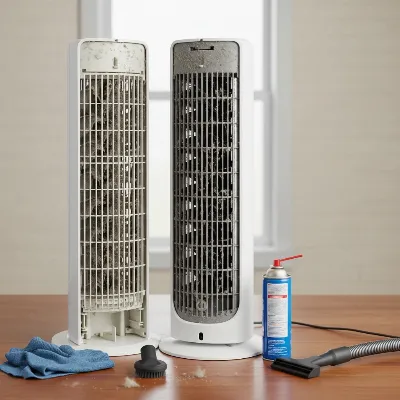
- Grille Cleaning: The Dreo Nomad One is designed for easy cleaning. Its rear grille and impeller wheel are removable, making it simple to access and clear away accumulated dust. Follow the manufacturer’s instructions for safe removal and reattachment.
- Impeller Wheel: Gently clean the impeller wheel with a soft brush or cloth to remove dust. Ensure the fan is unplugged before attempting any internal cleaning.
Storage Tips
When the cooling season ends, proper storage will protect your investment and ensure your fan is ready for the next year.
- Unplug and Clean: Always unplug the fan and perform a thorough cleaning before storing it.
- Original Packaging: If possible, store the fan in its original box to protect it from dust and physical damage. If the original packaging isn’t available, use a large plastic bag or cloth cover.
- Dry Location: Store the fan in a cool, dry place away from direct sunlight and extreme temperatures, such as a closet or pantry. This helps prevent damage to electronic components and plastic parts.
 Dreo Nomad One Tower Fan with removable grille for easy cleaning
Conclusion
The Dreo Nomad One Tower Fan, in 2026, continues to impress with its blend of powerful yet quiet operation, compact design, and user-friendly features. It delivers a refreshing breeze with impressive velocity while maintaining a remarkably low noise profile, especially in its dedicated Sleep mode. Its thoughtful design, including 90° oscillation, multiple speed and mode options, and easy-to-clean components, makes it a standout choice for bedrooms, offices, and small to medium-sized living spaces. While it may not offer the advanced smart home integration of some higher-end models, its core performance and excellent value for money solidify its position as a top contender in the tower fan market.
Are you ready to experience the quiet power and sleek design of the Dreo Nomad One in your home?
Frequently Asked Questions
Is the Dreo Nomad One Tower Fan truly quiet for sleeping?
Yes, the Dreo Nomad One is highly regarded for its quiet operation, with noise levels as low as 28 decibels in Sleep mode, which is quieter than a whisper. It also features a display auto-off and mute function to prevent light and sound disturbances.
How effective is the Dreo Nomad One at cooling a room?
The Dreo Nomad One provides powerful airflow with a velocity of up to 24-25 ft/s and 1,408 CFM, making it highly effective for personal cooling and circulating air in small to medium-sized rooms, typically up to 200 square feet.
Does the Dreo Nomad One come with a remote control?
Yes, the Dreo Nomad One Tower Fan includes a remote control for convenient operation from a distance. It also features a clever hidden compartment in the back of the fan for storing the remote when not in use.
Is the Dreo Nomad One Tower Fan easy to clean?
Absolutely. The fan is designed for easy maintenance, featuring a removable rear grille and impeller wheel. This allows for straightforward access to internal components, making it simple to clean away accumulated dust and debris.
Can I set a timer on the Dreo Nomad One Tower Fan?
Yes, the Dreo Nomad One includes a built-in timer function that allows you to set the fan to automatically turn off after a desired period, up to 8 hours. This feature is ideal for energy saving and ensuring comfort overnight.