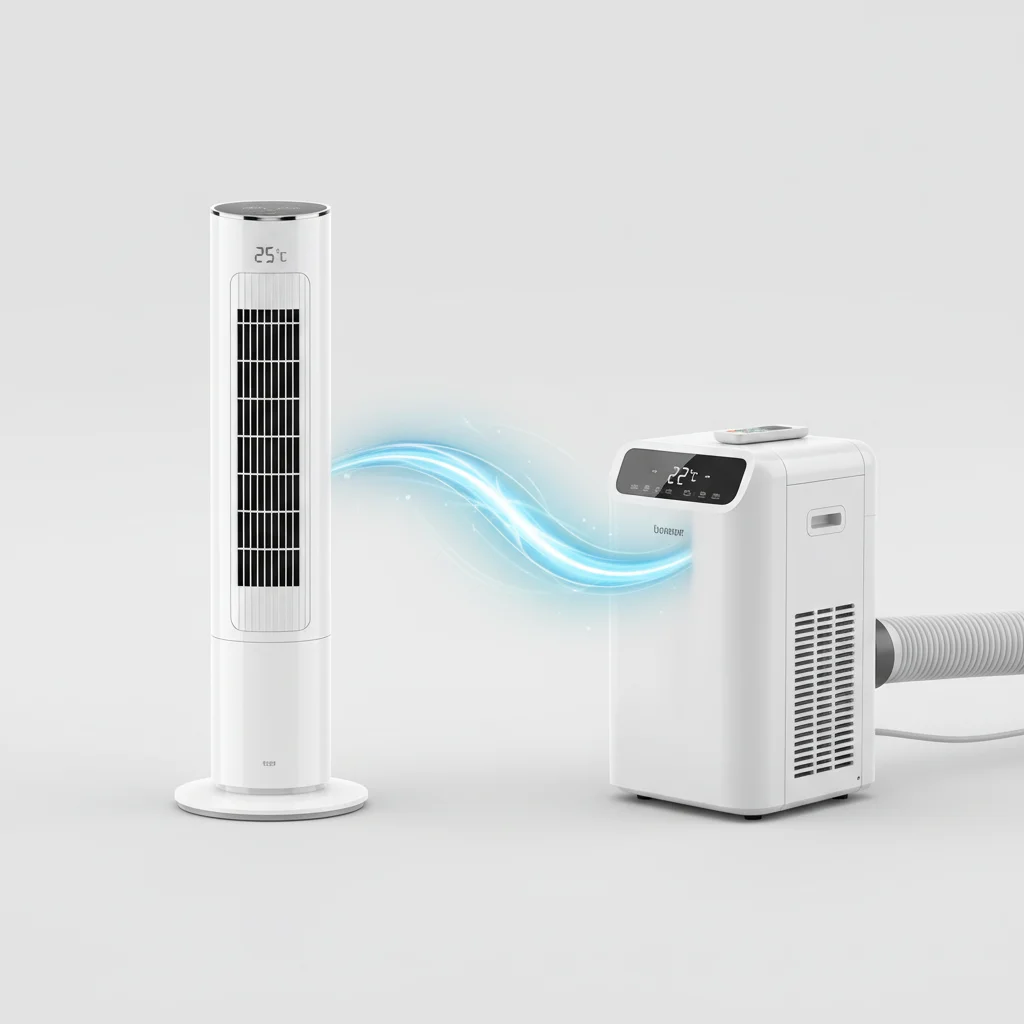
Deciding between a tower fan and an air conditioner for your cooling needs depends on several factors, including your budget, energy efficiency priorities, and the specific cooling power required. While a tower fan circulates existing air to create a wind-chill effect, an air conditioner actively removes heat and humidity from a room, offering a more significant temperature drop. For most personal cooling or small room applications, a tower fan is a cost-effective and energy-efficient choice, whereas an air conditioner is essential for truly hot climates or larger spaces requiring substantial temperature reduction.
Understanding Tower Fans: Air Circulation and Efficiency
Tower fans are designed to provide localized cooling by moving air around a room. They don’t lower the ambient temperature but create a breeze that helps evaporate sweat from your skin, making you feel cooler. This makes them incredibly energy-efficient, consuming significantly less power than air conditioners. A typical tower fan uses between 30 to 100 watts, making it an economical choice for everyday use. They are also portable and easy to move between rooms, offering flexible cooling wherever you need it. However, their effectiveness diminishes in very hot and humid environments where the air itself is already warm.
Air Conditioners: Powerful Cooling and Dehumidification
Air conditioners, on the other hand, work by a refrigeration cycle that removes heat and humidity from the air, then expels the warm air outside. This process actively lowers the room’s temperature, providing a much more substantial cooling effect. They are ideal for hot climates, large rooms, or situations where precise temperature control is necessary. Air conditioners also dehumidify the air, which can greatly improve comfort in humid conditions. The downside is their higher energy consumption, with even small window units typically using 500 to 1500 watts or more, leading to higher electricity bills. Installation can also be more complex, especially for central air systems or even some portable units that require window venting.
Cost Comparison: Initial Investment and Running Costs
|
Our Picks for the Best Tower Fan in 2026
As an Amazon Associate I earn from qualifying purchases.
|
||
| Num | Product | Action |
|---|---|---|
| 1 | Dreo Tower Fan for Bedroom, 25ft/s Velocity Quiet Floor Fan, 90° Oscillating Fans for Indoors with 4 Speeds, 4 Modes, 8H Timer, Bladeless Fan, Standing Fans, Silver, Nomad One (DR-HTF007) |

|
| 2 | Lasko High Velocity Oscillating Tower Fan for Bedroom, Garage, Basement, and Gym with Remote Control, Timer, 3 Powerful Speeds, 35" Silver/Black, U35115 |
|
| 3 | Dreo Tower Fan for Bedroom, 90° Oscillating Standing Fans for Room with 4 Speeds, 3 Modes, 28dB Quiet for Sleep, 25ft/s Velocity, 8H Timer, Remote, Living Room, Office, Home, Black |
|
| 4 | Honeywell QuietSet Whole Room Oscillating Tower filter Fan with Remote, White, HYF260 |
|
| 5 | DREO Tower Fan for Bedroom, 4 Speeds, 3 Modes Standing Fans for Room with 90° wide Oscillating, 28dB Quiet for Sleep, 25ft/s Velocity, 29ft Coverage, 8H Timer, Remote, Living Room, Office, Home, White |
|
| 6 | Lasko Elevation Adjustable Tower Fan 42”-54”, Pedestal Fan, 31 ft/s Airflow, Quiet 28 dB, 90° Oscillation, 12h Timer, Remote, Black, EST100 |
|
| 7 | PELONIS 40-Inch Tower Fan for Bedroom, Fan That Blows Cold Air, Oscillating Fan with Innovative Washable Design, 2000 CFM, 28ft/s Airflow, 4 Speeds + 2 Modes, 90° Oscillation, 23dB Quiet |
|
| 8 | Honeywell QuietSet Whole Room Tower Fan-Black, Oscillating Tower Fan with Remote, HYF290B |
|
| 9 | Dreo Tower Fan for Bedroom, 2026 Upgraded DC Motor, 28ft/s High Velocity, 20dB Ultra Quiet Standing Fan, 8 Speeds 4 Modes, 90° Oscillating Bladeless Fan for Indoors, Floor Fans with Remote, Black |
|
| 10 | LEVOIT Tower Fan for Bedroom, 25ft/s Velocity Standing Fan with 28dB Quiet for Sleep, Remoter, 12H Timer, 5 Speeds, 4 Modes, 90° Oscillation for Home, Office, Indoor, Bladeless 36 inch, White |
|
The initial cost of a tower fan is considerably lower than that of an air conditioner. You can find a good quality tower fan for $50 to $150, while even a basic portable air conditioner starts around $250 and can go up to $600 or more for window units. Central air conditioning systems represent an even larger investment, often thousands of dollars. Beyond the purchase price, the running costs are where the biggest difference lies. As mentioned, tower fans are very energy-efficient. An air conditioner, due to its power consumption, will significantly increase your electricity bill, especially if used frequently during peak summer months. Consider your budget for both the upfront purchase and ongoing utility expenses when making your decision.
- Tower fans offer personal cooling at a low cost.
- Air conditioners provide whole-room temperature reduction.
- Energy consumption is vastly different, favoring tower fans.
- Installation and portability vary significantly between the two.
- Humidity control is a key advantage of air conditioners.
When to Choose a Tower Fan
A tower fan is the perfect choice if you need to cool a small to medium-sized room, desire personal cooling at your desk or bedside, or want to supplement an existing cooling system. They are excellent for circulating air, reducing stuffiness, and creating a comfortable breeze. If you live in a mild climate where temperatures rarely soar above 85°F (29°C) or if you are conscious about energy consumption, a tower fan is a smart and economical solution. They are also great for apartments or rental properties where installing an AC unit might not be feasible.
When to Opt for an Air Conditioner
An air conditioner is indispensable if you live in a hot and humid climate, need to cool large spaces effectively, or require precise temperature control for comfort or health reasons. If your goal is to significantly lower the ambient temperature of a room or an entire home, a tower fan simply won’t suffice. Air conditioners are also superior for dehumidifying the air, which can be a major comfort factor in muggy conditions. While they come with a higher price tag and greater energy use, the cooling power and comfort they provide are unmatched for severe heat.
